Franklin Sustainability Talks
Franklin Switzerland proudly presents the Franklin Sustainability Talks, a dynamic series of lectures and events exploring innovative and interdisciplinary approaches to sustainability. Bringing together scholars, artists, industry leaders, and change-makers, this series invites the community to engage with pressing environmental, social, and economic challenges shaping our world today.
From the psychology behind environmental storytelling to global strategies for climate risk adaptation, each talk offers fresh perspectives on how we can foster a more resilient, just, and sustainable future. Join us throughout the academic year to exchange ideas, inspire action, and reimagine our relationship with the planet.
For a Pluriversal Ecology
Wednesday, April 22 2026, 18:30 (6.30 PM)
LAC Conference Room
Rooted in decolonial ecologies, the concept of the Pluriverse is an alternative to the Anthropocene, an emancipatory vision of “a world where many worlds fit”. Pluriversal epistemologies deconstruct the opposition between social life and nature, human and non-human subjects and bodies, and disclose “other potential horizons for the human, thought, and politics” (Arturo Escobar; Michal Osterweil, and Kriti Sharma, Relationality: An Emergent Politics of Life Beyond the Human, Bloomsbury Academic 2024). A pluriversal approach reveals that reality is populated by “earth-beings”, by geobodies such as stones, valleys, and rivers that question the spell of biocentrism and challenge deep-seated Western notions of life and personhood.
Learn More about Federico Luisetti
Federico Luisetti is Professor of Italian Studies and Environmental Humanities at the University of St. Gallen. He is the author of books and essays in critical theory and the environmental humanities, including Nonhuman Subjects: An Ecology of Earth-Beings (Cambridge University Press, 2023; translated into Italian, French and German) and The Anomie of the Earth: Philosophy, Politics, and Autonomy in Europe and the Americas (with John Pickles and Wilson Kaiser, eds., Duke University Press, 2015). Together with Flurina Gradin, he coordinates the research network in political ecology Unruly Natures.

Facilitating Systems Change at the Intersection of Finance and Degrowth
Wednesday, February 25 2026, 19:00 (7.00 PM)
LAC Conference Room
How can we support each other through the changes needed to realize economies that can provide wellbeing for all within planetary boundaries? This guiding question has led Anastasia Linn to an unexpected action area: engaging financial professional around degrowth.
Understood as an intentional, democratic and just reduction of material and energy throughput in the Global North, degrowth is aligned with other New Economy concepts like Doughnut Economics or the Wellbeing Economy. It is, however, intentionally more provocative and harder to sell. One would think these efforts would be especially hard in a growth-centered industry like finance, but by bringing together industry expertise, awareness of experience design, and a psychologically-informed peer-to-peer approach, Arketa Institute for Post-Growth Finance has been doing exactly that. In this talk, Arketa Institute Co-Founder Anastasia Linn will share insights into their approach and reflect on how her interdisciplinary background has been an asset in this work.
By building skills across disciplines, applying critical thinking, and integrating psychological skills in line with the IDGs, her story evidences how the approaches taught in the MAST program can contribute to important change efforts in in new and impactful ways.
Speaker: Anastasia Linn, Postgrowth Finance, Organizational Behavior, the Just Transition.
Learn more about Anastasia Linn
Anastasia Linn works at the intersection of organizational behavior, sustainable finance, and the Just Transition. Building on a background in design management and strategic innovation, she has worked across the areas of leadership, strategic communication, and sustainability since 2017. From helping establish the unique experience that is the House of Beautiful Business and organizing high-profile UNFCCC COP side events with World Climate Foundation to engaging next generation wealth holders at the Center for Sustainable Finance and Private Wealth and guiding the rebrand of Degrowth Switzerland, she has developed a multi-faceted skillset which she now brings to bear in service of realizing an economy that can provide wellbeing for all within planetary boundaries. Together with two former Wall Street financial professionals, she co-founded Arketa Institute for Post-Growth Finance in 2024.

Climate Risk Assessment and Adaptation
Wednesday, February 11 2026, 18:30 (6.30 PM)
LAC Conference Room
Climate change mitigation is essential to limit planetary damage, yet current trajectories indicate a future exceeding 2°C of warming rather than the 1.5°C goal. Even if global emissions targets under the 2015 Paris Agreement are achieved, communities will continue to experience increasingly severe climate impacts—such as extreme heat, intense precipitation, and flooding—for decades. Consequently, climate change adaptation is an imperative alongside mitigation. Adaptation requires anticipating climate-related risks and managing their consequences in both present and future contexts.
Climate change adaptation, like mitigation, is a shared responsibility across sectors and societies. The overarching ambition is to strengthen the resilience of natural systems, businesses, customers, and communities to the impacts of a changing climate.
This lecture presents a climate resilience approach that supports organizations in reducing losses and building adaptive capacity in the face of climate risks. Climate risk is examined through three interrelated dimensions: hazards (such as increased heat, wind, or rainfall), exposure to those hazards, and the controls available to manage and reduce impacts. By combining models and scenarios to assess exposure and vulnerabilities with practical measures that can be implemented immediately, climate resilience is framed as proactive risk management—one that emphasizes timely action rather than waiting for perfect data or regulatory mandates.
Speaker: Amar Rahman, Global Head of Sustainability and Climate Solution at Zurich Insurance.
Amar Rahman is the Global Head of Sustainability and Climate Solutions at Zurich Insurance. He supports customers in identifying, evaluating, and strengthening physical and operational resilience to natural hazards and climate change. He joined Zurich Insurance Group in 2011 after a career in civil engineering, where he specialized in large-scale infrastructure projects across the energy, transportation, and water sectors. Amar Rahman holds a bachelor’s degree in civil engineering from the University of Baghdad, a PhD in earthquake engineering and structural dynamics from the University of Canterbury (New Zealand), and an Executive MBA from the University of Strathclyde (Scotland).
Perspectives on the Human-Earth Relationship
Wednesday, January 21 2026, 18:30 (6.30 PM)
Nielsen Auditorium
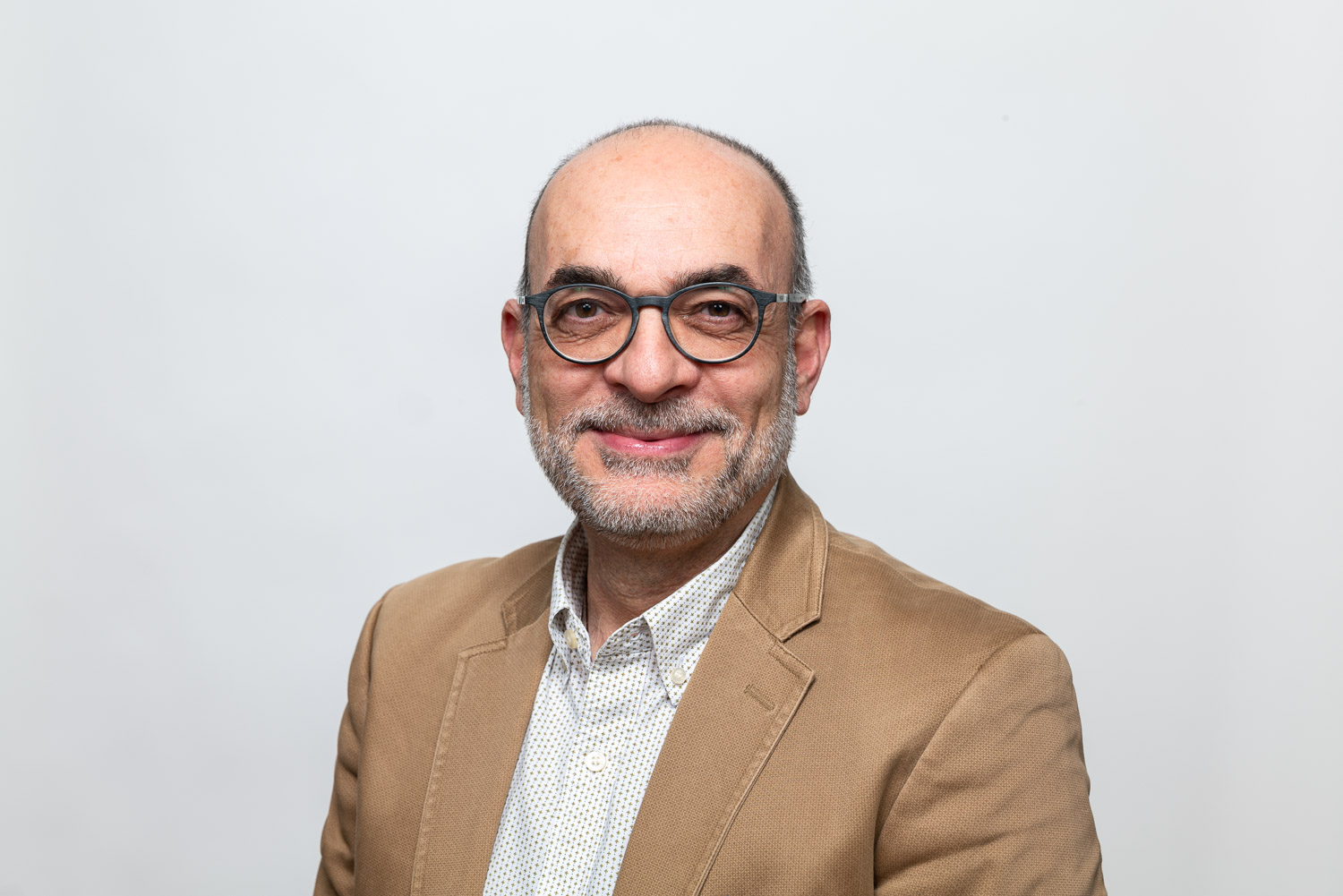
In the last 12 years, environmental concerns and our relationship to the Earth have moved to center stage. Biemann's artistic practice takes a systemic approach to environmental conditions by connecting a theoretical and planetary macro level with the micropolitics on the ground.
Discussing her artistic practice in a first part of the lecture in such projects as Deep Weather on atmospheric chemistry linking extreme parts of the world (2013), Acoustic Ocean on inter-species communication (2018) and Forest Law on the rights of nature and indigenous cosmology (2014), she raises questions regarding the entanglement of aesthetics, ecology and geopolitics to narrate a changing planetary reality.
The last part of the lecture will cover her most recent projects and video works in Colombia (2018-2023) where her focus has shifted to the role of the mind in experiencing the world, i.e. the interaction between mind, body and the environment. Forest Mind (2022) is a video work that emerges from a long-term collaboration with the Indigenous Inga people in the south of Colombia. The video unites diverse strands of knowledge on the metaphysics of plants and plant-human relationships. The co-operation with the Inga involves the creation of a biocultural Indigenous University (or pluriversity) in the Andean Amazon where the territory is conceived as a vocal, cognitive and minded entity.
Speaker: Ursula Biemann, Artist, Curator, Theorist
Learn more about Ursula Biemann
Ursula Biemann is an artist, author, and video essayist. Her artistic practice is strongly research-oriented and involves fieldwork in remote locations from Greenland to Amazonia, where she investigates climate change and the ecologies of oil, ice, forests and water. In her multi-layered videos, the artist interweaves vast cinematic landscapes with documentary footage, SF poetry and academic findings to narrate a changing planetary reality. Biemann’s pluralistic practice spans a range of media including experimental video, interview, text, performance, photography, cartography, props and materials, which converge in formalized spatial installations. Her work also adopts the form of publications, lectures, and curatorial as well as collaborative research projects.
Climate Psychology and Storytelling
Wednesday, November 5 2025, 16:30 - 17:30
LAC Conference Room
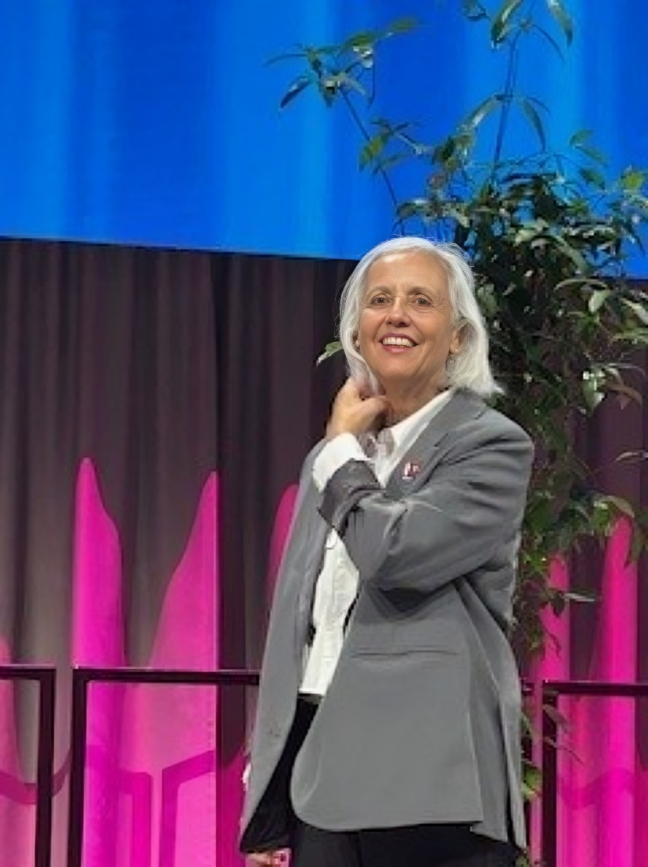
Can reading and discussing stories help us take the perspective of the environment? Can storytelling empower people to take more constructive climate action? This talk discusses climate psychology from the perspective of emotions linked with climate change, further tying climate emotions with the topic of environmental storytelling. Discussing her own recent and still unpublished research on filmic climate fiction, cli-fi novels, and a novel cartoon-based methodology to interrogate people’s memories spent in nature, Professor Toivonen traces some of the potential ways environmental narratives can shake and reshape our thoughts and emotions towards climate change. Also, some of the high -and perhaps unrealistic- expectations for stories to be able to do anything and everything for inspiring better climate citizens are critically reviewed.
Speaker: Heidi Toivonen, Professor of Psychology, Franklin Switzerland
Learn more about professor Toivonen
Heidi Toivonen is the Nora McNeely Hurley Assistant Professor of Psychology at Franklin Switzerland. Prior to her academic career, she worked for ten years as a clinical psychologist in various settings in her country of origin, Finland. Since her postdoc research conducted at Ghent University, Belgium, in a multidisciplinary group of environmental narrative scholars, Toivonen has been very interested in how various audiences experience and discuss different forms of environmental storytelling from climate fiction books to environmental cartoons.