
RESEARCH TEAM
The two-year project "Pandemics and Borders," based at Franklin, is funded by the Swiss Network for International Studies (SNIS). The project is led by Professor Marcus Pyka and Professor Bernd Bucher, with archival research conducted by postdoctoral researcher Giorgio Ennas in cities including Nantes, Rome, Sarajevo, and Istanbul.
In addition to the research activities, the project encompasses the coordination of workshops involving researchers and faculty from six different countries, as well as the management of the publication process for articles in peer-reviewed journals and with leading international academic publishers. The project is expected to generate both single-authored and collaborative publications.
Designed to foster an international and multidisciplinary approach, the project provides opportunities for collaboration and scholarly exchange with researchers abroad and across all academic areas at Franklin.
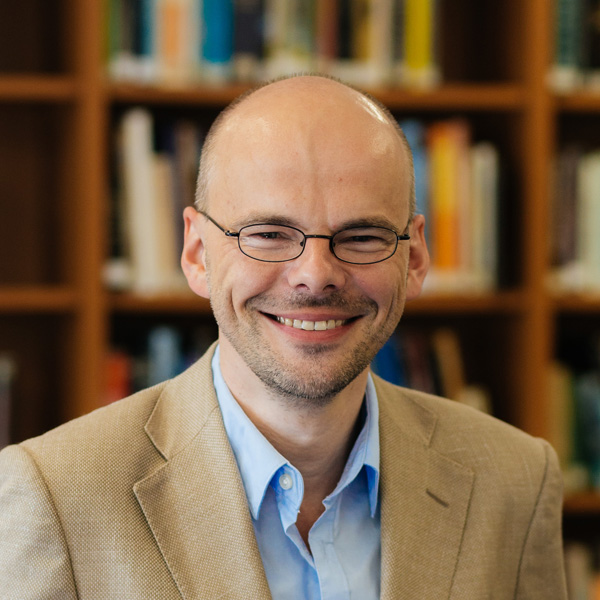
Prof. Marcus Pyka
Post-Doctoral Research Coordinator; Associate Professor of History
His research interests focus on questions of identity building. In his book Heinrich Graetz – Jewish Identity and Historiography (Vandenhoeck & Ruprecht Publishers, 2008), he addressed the construction of Jewish identity by means of historiography in 19th century Germany. He has received research fellowships from the German National Academic Foundation, the Institute for European History (Mainz/Germany), and Harvard University, among others. Current research focuses on the use of morality and of religious values for identity politics, both with regard to modern Bourgeoisie and the modern understanding of “Europe”. His teaching experience includes world history and world religions, with a focus on Judaism from the Biblical Times onwards, the Islamic world, India, and the West.
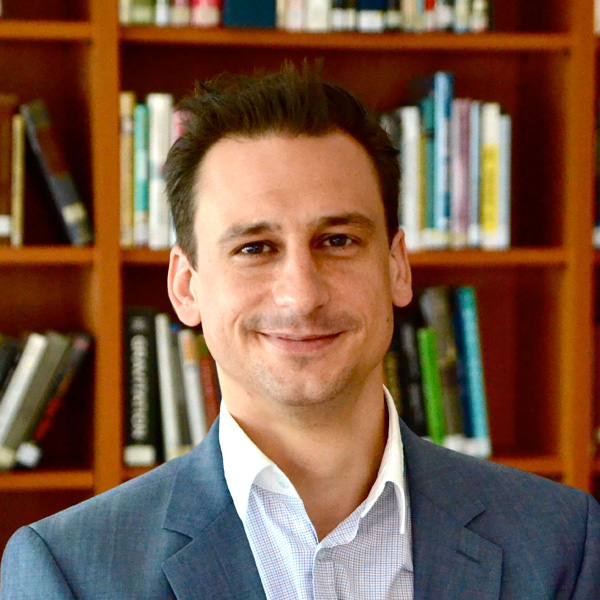
Prof. Bernd Bucher
Post-Doctoral Research Co-Coordinator; Chair of the Academic Division of Communication, History and Politics; Associate Professor of Political Science
Bernd Bucher received his Ph.D. from the University of St. Gallen in 2011 and held the position of a post-doctoral researcher at the University of Bielefeld (faculty of sociology) prior to joining Franklin Switzerland in 2015. His primary research interests are located at the intersection of IR theory and sociology. Power, language, and contestation practices, as well as security dynamics, are central to his research which utilizes (historical) discourse analysis and draws on qualitative methods. He has successfully published in leading academic journals and is currently part of a number of individual and collaborative research projects which focus on applying processual-relational thinking to IR. Bernd Bucher regularly peer reviews for leading academic journals and actively participates in leading international professional associations and conferences.
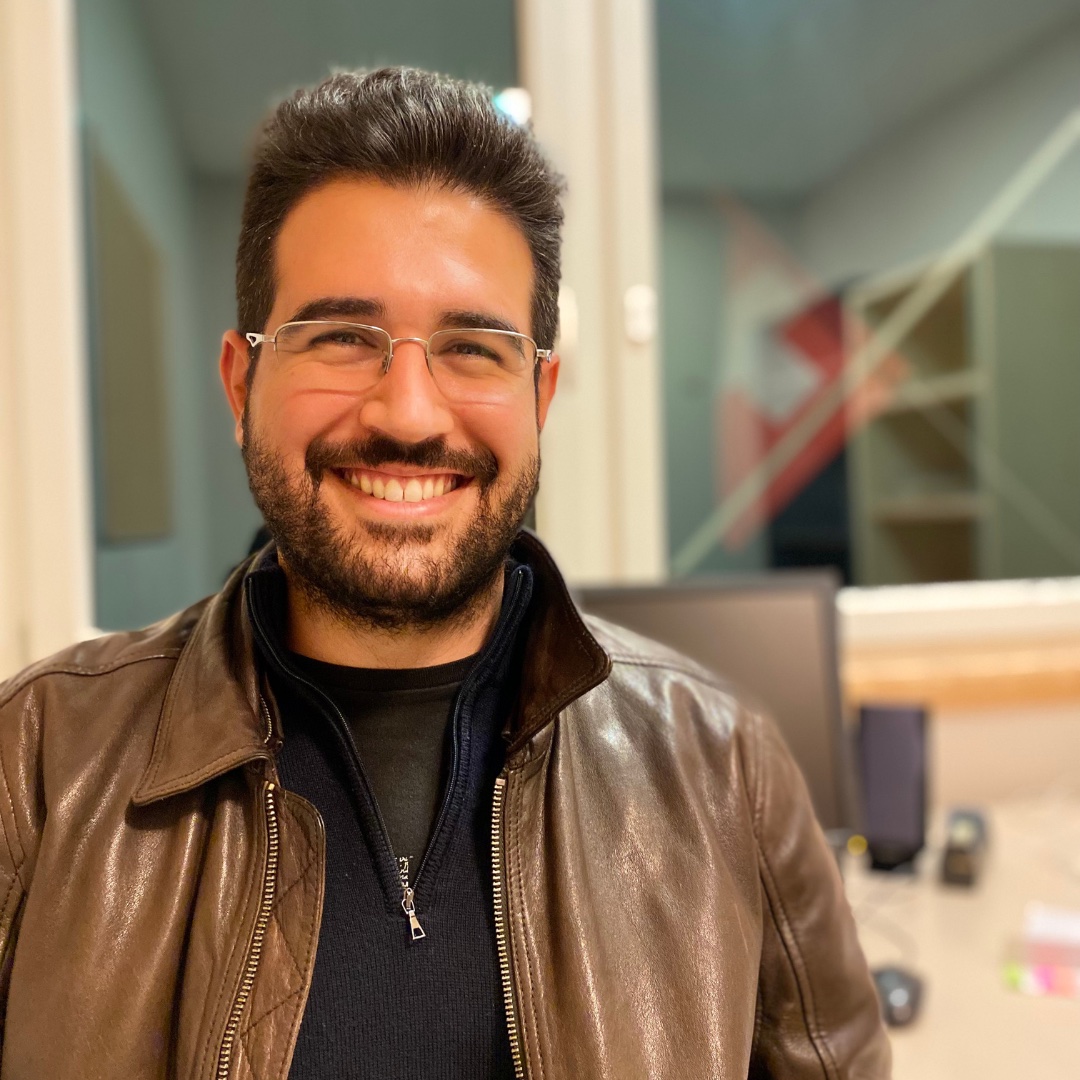
Dr. Giorgio Ennas
Fellow Post-Doctoral Researcher
Giorgio Ennas completed his Master’s degree in Languages and Civilisations of Asia and Mediterranean Africa at Ca' Foscari University in Venice in 2016. In 2021, he received his PhD from the department of History and Civilisation (HEC) at the European University Institute (EUI) in Florence. His research interests are: History of the Mediterranean Sea, History of Medicine, History of diplomacy and the history of cultural and diplomatic relations between the Ottoman Empire, North Africa and European states in the “long” 19th century. In November 2021, he started working as Principal Investigator (PI) on the two-year project entitled “Pandemics and Borders” at Franklin Switzerland in Lugano, funded by the Swiss Network for International Studies (SNIS).
The Project
The project focuses on understanding how borders are created in relation to fighting off pandemics; not only from a historical perspective, but also by understanding how different States managed conflicts, the widespread of diseases, and cooperate nowadays. Therefore, the research is not limited to the historical dimension, but also to the current political one.
Dr. Giorgio Ennas is today the principal investigator in the project and spends most of his time on the field, visiting various archives around Europe and Turkey, and collecting valuable information on the influence of pandemics and the development of borders in the 19th century.
Outreach
This project meaningfully deepens Franklin Switzerland’s relations with other Swiss and European academic institutions in six different countries. To name a few: the University College in Dublin, the Italian National Research Council Cagliari, Università Ca’Foscari in Venice, the University of Basel, The University of Vienna, Université de Neuchâtel, The Graduate Institute in Geneva, the University of Sarajevo, and the European Center for Peace and Development in Belgrade. We are excited and honored that this research project is supported by more than a dozen leading scholars across a number of disciplines, and we very much look forward to welcoming our collaborators at Franklin for workshops and events to be held in the next two years.
Moreover, the Ticino region can proudly count a total of two SNIS funded research projects, as a team of researchers at Università della Svizzera Italiana (USI), led by Prof. Jean-Patrick Villeneuve, also succeeded in acquiring a grant for a research project on “Deliberative Quality in Trade-Related International Organizations.”
Conclusions
The research project "Pandemics as Driver towards Modern Borders and International Collaboration in 19th Century Mediterranean and Southeastern Europe," coordinated by Professors Marcus Pyka, Bernd Bucher, and Giorgio Ennas at Franklin Switzerland, has made significant contributions to understanding how pandemics shaped national borders and international collaboration during 1865-1867. By analyzing diplomatic documents, medical descriptions, and various records, the team gained new insights into how cholera emergencies influenced border strengthening and quarantine networks. This interdisciplinary study not only advances academic research in medical history, border studies, and international relations but also holds relevance in contemporary discussions about pandemics and their impact on society and governance.
Project funded by
