THINK DIFFERENTLY. REIMAGINE SYSTEMS. FOSTER CHANGE.
Franklin Switzerland's Master of Arts in Sustainability and Transformation (MAST) is more than a degree; it’s a launchpad for changemakers. In a world facing deep, interwoven crises, such as climate disruption, social injustice, and environmental collapse, we need bold new ways to think, lead, and act. MAST blends liberal arts traditions with cutting-edge sustainability practice to equip you to lead meaningful transformation.
Through immersive learning, interdisciplinary coursework, and real-world projects, you will build the skills and insights to navigate complexity and shape the future, from policy and education to business and community leadership.
Ready to shape sustainable futures?
APPLY NOW
(August 2027 - July 2028)
With Optional 4th Semester: 60 Credits / 120 ECTS
With Retreats in Zurich and Geneva
Why choose MAST?
MAST prepares students to understand complex sustainability challenges and create meaningful change across sectors. Through an interdisciplinary approach, students explore how environmental, social, economic, political, and cultural systems interact, and learn how to transform ideas into action.
With MAST, you will gain a broad understanding of sustainability studies, real-world experience, an international professional network, and a global perspective. You will graduate with the confidence and skills to map out change wherever you go, supported by a degree fully accredited in both Switzerland and the U.S., opening doors to global opportunities.
What makes the program distinct:
- Learn from experts and practitioners in Switzerland, one of the world’s most sustainability-forward countries.
- Gain interdisciplinary insight into sustainability challenges within their broader political and cultural contexts.
- Develop skills in communication, governance, design thinking, and systems thinking.
- Engage in project-based learning rooted in critical thinking and real-world application.
- Build a professional portfolio through hands-on projects and partnerships with NGOs, corporations, and international organizations.
- Explore sustainability across diverse fields, including education, fashion, food systems, health, culture, and social innovation.
- Experience sustainability in practice through retreats in Zurich and Geneva.
- Benefit from small cohorts, personalized mentorship, alumni guidance, and career development support.
- Build an international professional network and apply your knowledge in diverse settings.
- Graduate ready to lead with strategic insight and human understanding.
Why Study Sustainability in Switzerland
Switzerland offers an exceptional environment for studying sustainability, not only as a place to live, but as a real-world laboratory where sustainable solutions are developed, tested, and refined. Known for its political stability, strong institutions, and forward-looking approach to policymaking, the country provides unique insights into how societies address challenges related to energy, mobility, education, land use, finance, and social cohesion.
Through Franklin's MAST, Switzerland becomes an extension of the classroom. Students engage directly with cities, organizations, and institutions that are shaping sustainable futures, gaining firsthand exposure to how ideas are translated into action. Rooted in Switzerland and enriched by Franklin’s global perspective, the program connects local innovation with global challenges, empowering students to understand, and contribute to, the transformations needed for a more sustainable world.
Degree structure
Master of Arts in Sustainability and Transformation (MAST)
The MAST is a one-year, three-semester program (August–July) totaling 45 credits (90 ECTS), with an optional fourth semester that adds 15 credits, bringing the degree to 60 credits (120 ECTS).
Based in Lugano, Switzerland, and enriched by immersive retreats in Zurich and Geneva, the program offers an international learning experience that combines academic rigor with practical engagement. Students who choose the optional fourth semester may further deepen their learning through applied research placements with partner organizations in Lugano, Costa Rica, or Madagascar.
The curriculum is designed as a progression from understanding sustainability challenges to developing the skills and experience needed to create meaningful change. Across three core semesters, and an optional fourth semester, you move from foundational knowledge, to transformation skills, to collaborative practice with real-world partners.
Semester 1: Foundations of Sustainability
The first semester establishes a shared intellectual foundation in sustainability studies. Drawing on environmental studies, economics, social thought, and the environmental humanities, you explore how different disciplines understand sustainability challenges.
Through interdisciplinary methods and shared case studies, you learn to connect diverse forms of knowledge, critically evaluate different perspectives, and understand how each contributes to addressing complex sustainability issues.
Semester 2: Skills for Transformation
Building on this foundation, the second semester focuses on how change happens. You develop practical skills in communication, leadership, design thinking, facilitation, and policy while learning how to collaborate effectively across sectors and organizations.
Immersive retreats, workshops, and engagement with practitioners help bridge theory and practice, equipping you with the tools needed to support sustainability transformations in real-world contexts.
Semester 3: Praxis and Collaboration
In the third semester, you apply your learning through a collaborative Master's project developed with external partners. Working closely with faculty supervisors and partner mentors, you address concrete sustainability challenges and contribute to projects with real-world impact.
The semester culminates in a practice-based Master's thesis and a public presentation of your work.
Optional Semester 4: Defining Your Trajectory
Students who wish to extend their studies may choose an optional fourth semester, expanding the degree from 30 credits / 90 ECTS to 60 credits / 120 ECTS.
This semester allows you to deepen your expertise and shape your own professional or academic pathway through one of two tracks:
Research Track
Designed for students who wish to deepen their analytical and intellectual engagement with sustainability challenges, this track focuses on independent research under the supervision of a faculty member in the student's area of interest.
Application Track
Designed for students who wish to tackle sustainability challenges in practice, this track combines applied inquiry with research-informed methods. Students work closely with a Franklin partner organization on a real-world project that addresses a concrete sustainability issue.
Possible opportunities within the Application Track may include:
- An internship with partner organizations in Madagascar or Costa Rica
- The development of a sustainability-focused startup or social enterprise
- Other approved practice-based projects aligned with the student's goals
orld sustainability challenge through applied and research-informed inquiry with a Franklin partner organization.
Accelerated Program: 3+1 Pathway into the MAST
Eligible students completing a 120-credit BA at Franklin Switzerland or a partner institution with a formal agreement may apply to transition into MAST. Students complete their final 15 undergraduate credits during their first semester of MAST, accelerating the move from undergraduate to graduate study while maintaining academic rigor.
Interested students should consult their academic advisor and contact MAST Academic Director Caroline Wiedmer (cwiedmer@fus.edu) to confirm eligibility.
Want to develop a deep understanding of sustainability and how to apply it in practice? Combine Franklin’s Bachelor’s degree in Social Justice and Sustainability with the Master of Arts in Sustainability and Transformation (MAST) through the 3+1 pathway.
Career Paths After Graduation
Graduates of this program are not only equipped to work in sustainability — they are prepared to lead it. They bring systems fluency, ethical depth, and real project experience to a wide range of fields, such as:
- Sustainability Consulting
- Public Policy & Governance
- ESG Strategy & Corporate Responsibility
- Nonprofit Leadership & Advocacy
- Urban Planning & Regenerative Design
- Sustainability Communication & Media
- Social Entrepreneurship & Circular Economy
- Education & Curriculum Development
- Community-Based Organizing & Ecological Restoration
- Cultural Institutions such as Museums and Educational Institutions
Eligibility & Admissions
MAST uses a holistic admissions process that considers applicants’ academic preparation alongside professional experience, interdisciplinary interests, and motivation for engaging with sustainability and transformation.
Unless a prior institutional agreement establishes a 3+1 pathway, applicants must meet the following standard eligibility requirements:
- A Bachelor’s degree from an accredited university, completed by the time of enrollment
- A recommended GPA of 3.2 (or equivalent). This is not an absolute cut-off; please address reasons for a lower GPA in your personal statement.
- Two letters of recommendation. If you completed your BA or BS more than 4 years ago, we recommend an academic letter and one professional letter.
- A concise personal statement (1-2 pages)
- English proficiency required if previous degree was not in English
(CEFR B2 / IELTS 6.5 / TOEFL 90 / Cambridge 160–179)
In addition to academic credentials, the admissions committee values:
- Relevant professional, volunteer, or research experience
- Interdisciplinary curiosity and openness
- Evidence of critical thinking, communication skills, and commitment to sustainability in your area
- Applicants from a wide range of academic disciplines are encouraged to apply
Personal statements that speak both to your previous experience, your personal interest in sustainability, and what you hope to achieve with this program.
Enrollment Deadlines
Applications to the Master in Sustainability and Transformation are reviewed on a rolling basis. We admit students until the cohort for Fall 2027 (up to 22 students) is full. Beginning February 15, applications will be reviewed in bi-weekly admissions rounds, with shortlisted candidates invited to an interview with the Academic Director.
- Applicants who require a student visa (non-EU, non-Swiss, non-EFTA): Applications will be accepted until May 1.
- Applicants who do not require a student visa:
Applications will be accepted until July 15, subject to program availability.
Because spaces are limited, we encourage early applications.
Franklin students and alumni, as well as students from Franklin’s partner institutions, may contact the Office of Admissions, regarding streamlined application pathways: admissions@fus.edu
Founding Cohort Pricing (Fall 2026)
- CHF 25,500
Three-semester program (45 credits / 90 ECTS) - CHF 8,500
Optional fourth semester (15 credits / 30 ECTS), extending the degree to 60 credits / 120 ECTS
Please note: internal scholarships are not available for this program.
Students are encouraged to finance their studies through a combination of external funding sources, which may include:
- Government-sponsored loans or scholarships
- Private education loan providers
- Employer sponsorship
- National or private foundations
Eligibility and availability depend on a student’s country of citizenship and/or residence.
For U.S. students, the MAST program is approved for Title IV U.S. Federal Student Aid through the U.S. Department of Education. Approved private lenders include Sallie Mae.
Swiss students should consult with their cantonal offices for educational funding.
Students from other countries are encouraged to consult funding providers directly. Once an offer of admission has been made, the MAST program team is happy to support external funding applications by providing:
- Official admission letters
- Tuition and fee confirmation
- Program descriptions and accreditation details
- Enrollment verification documentation
A Message from the Academic Director
What does it mean to think across disciplines, design for complexity, lead with empathy, and act for impact? These questions lie at the heart of MAST.
Learn more about the thinking behind MAST from the person who helped shape it.
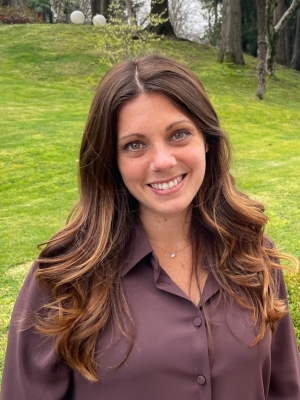
Professor Caroline Wiedmer, Academic Director of the MAST shares the vision, structure, and goals of Franklin’s new graduate program.